Each year, the Pantone Color Institute selects a “Pantone Color of the Year”, symbolic of what they believe to be taking place in our global culture. While some choose not to believe in the science and research behind Pantone’s decision making process, it is impossible to deny that they have been extremely adept in predicting coloration trends well before their time. Whether these predictions are a result of social, economic or political insight, Pantone always seems to know what we are thinking before we even realize it ourselves.
Many were surprised and slightly confused when Pantone announced their selection for 2017 Color of the Year: Greenery. Compared to selections from previous years, some of which include Rose Quartz and Serenity (2016), Marsala (2015) and Radiant Orchid (2014), Greenery is vibrant and well, different.
“This particular green is an unusual color: a combination of yellow and blue, or warmth and a certain cool,” says Leatrice Eiseman, the executive director of the Pantone Color Institute. “It speaks to what we call the ‘re’ words: regenerate, refresh, revitalize, renew”. [1]
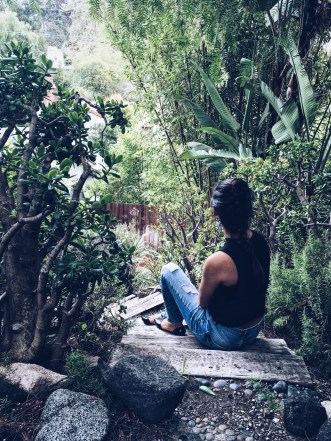 Styling: Top by H&M, Jeans by Zara, Ballet Flats by Jeffrey Campbell
Every year comes with its own set of challenges, and 2016 was a year of turmoil, politics and hate. Greenery represents a sense of hope, of a new beginning that will shine brighter than the hate we have come to associate with the year 2016.
Ms. Eiseman asserts that we are living in stressful times, and that the color Greenery provides us with the “reassurance” that we desire despite our “tumultuous social and political environment”. [2] This sentiment proved to be true as only days after the release of Greenery, Trump’s name dominated major headlines in relation to the Department of Energy. [3] Trump, a firm believer that global warming is “a hoax”, recently requested a list of every scientist related to the studies of climate change within the Department of Energy. Though the department refused to compile the list for the president-elect as they felt a moral obligation to protect those individual’s identities, Americans are slowly becoming more cognizant of our impact on the environment, as well as the repercussions that could result from Trump’s political agenda.
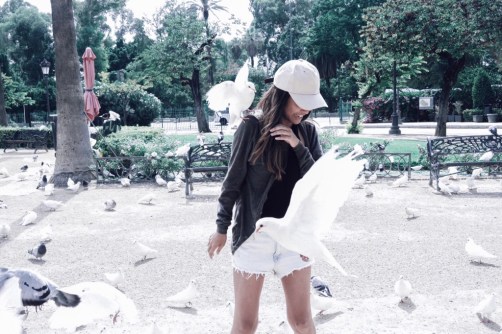 Styling: Cap by WeGo, Cardigan by Cotton On, Leotard by American Apparel, High-Waist Shorts by Urban Outfitters
This is not the first time Pantone’s Color of the Year has been theorized to hold political meaning. Last year was the first time Pantone chose two colors, Rose Quartz and Serenity, rather than one. These two colors, symbolic of baby blue and baby pink, were representative of human sexuality and the idea of gender fluidity. 2016 was an extremely important year for the discussion of sexuality, and we as a country were finally starting to acknowledge the idea that gender fluidity is very real and increasingly important for us as a society to understand. Not only was sexuality a trending topic of conversation, but it also began to impact the fashion industry as well; women’s clothing started to take on more “masculine traits” and fast-fashion retailer Zara successfully launched a new ungendered line, which radically challenged traditional retail practices.
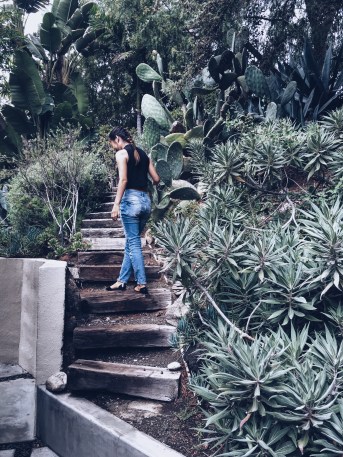 Styling: Top by H&M, Jeans by Zara, Ballet Flats by Jeffrey Campbell
While our country is in no way done discussing gender fluidity, 2016 was a year of great strides. We as a society are progressing the discussion of these topics in a way that has not been explored before. As 2017 quickly approaches, it seems that Pantone senses a shift in how we will talk about the environment, and that the shift will be a positive one.
ACADEMIC INSIGHTS:
[1] NY TIMES “Color of 2017? Pantone Picks a Spring Shade”
 Lieutalica. by Tiffanie Sayaka